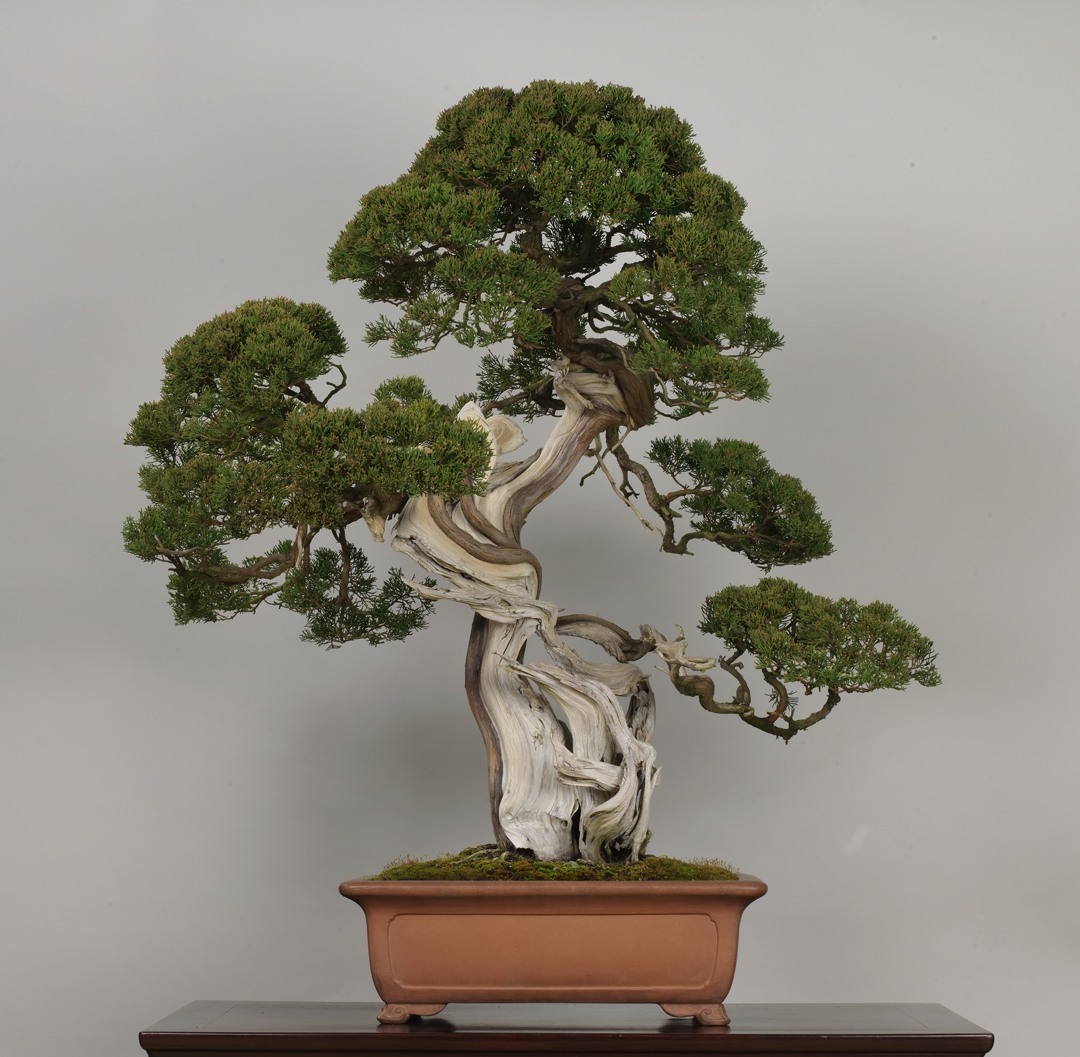
A lot of “Jushu” and “Jukei” is also charm of Bonsai. Do you know that? In the page, I explain meaning and type of “Jushu and “Jukei.
1. What does “Jushu(樹種)” mean
“Jushu(樹種)” means that type of trees. that is classified widely two types, “Shohaku(松柏)” and “Zoki(雑木)”.
a. Shohaku(松柏)
“Shohaku” refer to two types of trees, pine and shinpaku (tree’s name). this is conifer, and typical image of Bonsai.
b. Zoki(雑木)
“Zoki” means miscellaneous trees. this is different from “Shohaku” to chang look by season. For example, maple tree, Japanese wisteria, Chinese quince, and so on.
2. What does “Jukei(樹形)” mean
“Jukei(樹形)” means that shape of trees. just changing “jukei” of bonsai will make a big difference. In other words, “jukei” make a each characteristic of each bonsai.
then, I introduce 7 types of Jukei.
a. Moyogi(模様木)
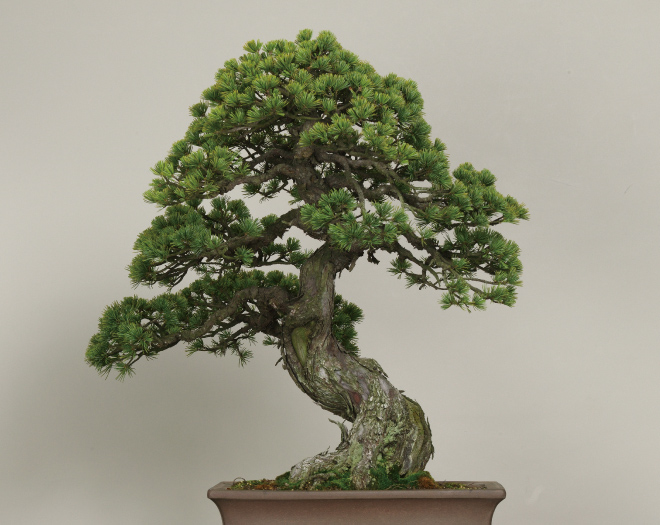
From web site of Saitama city Omiya Bonsai Art Museum
“Moyougi” is one of the representatives “Jukei”. a lot of people remember this type of Bonsai if ask about Bonsai. a characteristic of this is that the trunk has a loose S-shape.
b. Chokkan(直幹)
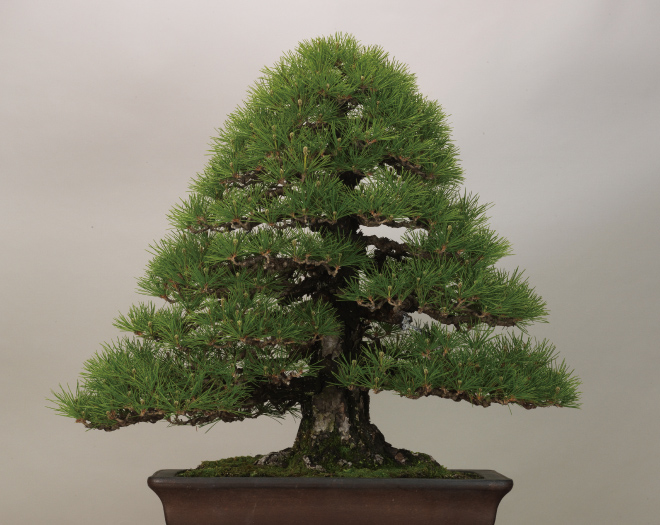
From web site of Saitama city Omiya Bonsai Art Museum
“Chokkan” also is the representatives “Jkei” like “Moyougi”. this is not S-shape, characterized by a straight trunk like this picture.
c. Shakan(斜幹)
“Shakan” is like “Chokkan”. but this has a straight and slanted trunk,
d. Soukan(双幹)
“Soukan” also is classified “Chokkan”.This means a “Chokkan” with a two’s trunk
e. Fukinagashi(吹き流し)
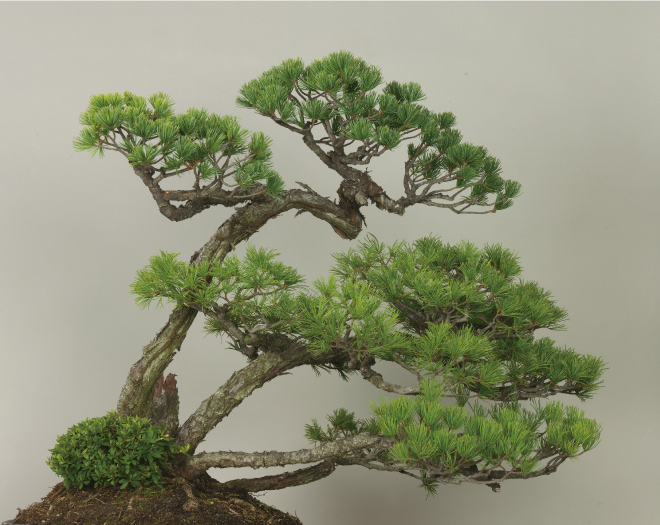
From web site of Saitama city Omiya Bonsai Art Museum
“Fukinagashi” simply means Streamer. this expresses that it is withstanding strong winds blowing from one direction. This is newer ”Jukei” then other Bonsai.
f. Kengan(懸崖)
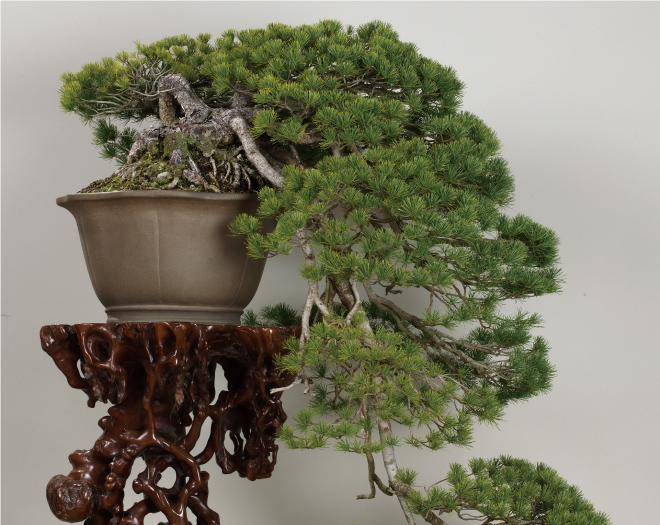
From web site of Saitama city Omiya Bonsai Art Museum
A feature of the “kengan” is that the trunk was growing below the plant pot. this expresses the harsh nature by hanging from sheer cliffs. My favorite type of bonsai.
g. Neturanari(根連なり)
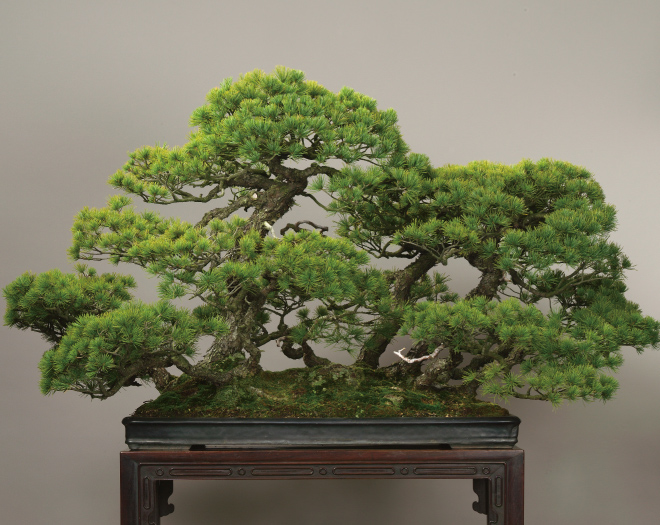
From web site of Saitama city Omiya Bonsai Art Museum
“Netsuranari” is characterized by growing several trunks connected from the roots of the earth’s surface to the left and right like the picture.
In addition, “Jukei” has trees of many types. For example, Bunjngi(文人木), and so on.
3. Reference of this page
- Saitama city Omiya Bonsai Art Musium (n.d.). さいたま市大宮盆栽美術館. さいたま市大宮盆栽美術館. https://www.bonsai-art-museum.jp/ja/about/trees/ (2023/2/21)